International Scholars Seek Research Partnership with KIU on Electoral Processes
- Agnes Kiconco
- /
- November 03, 2026
- 54

By Hattie Wright
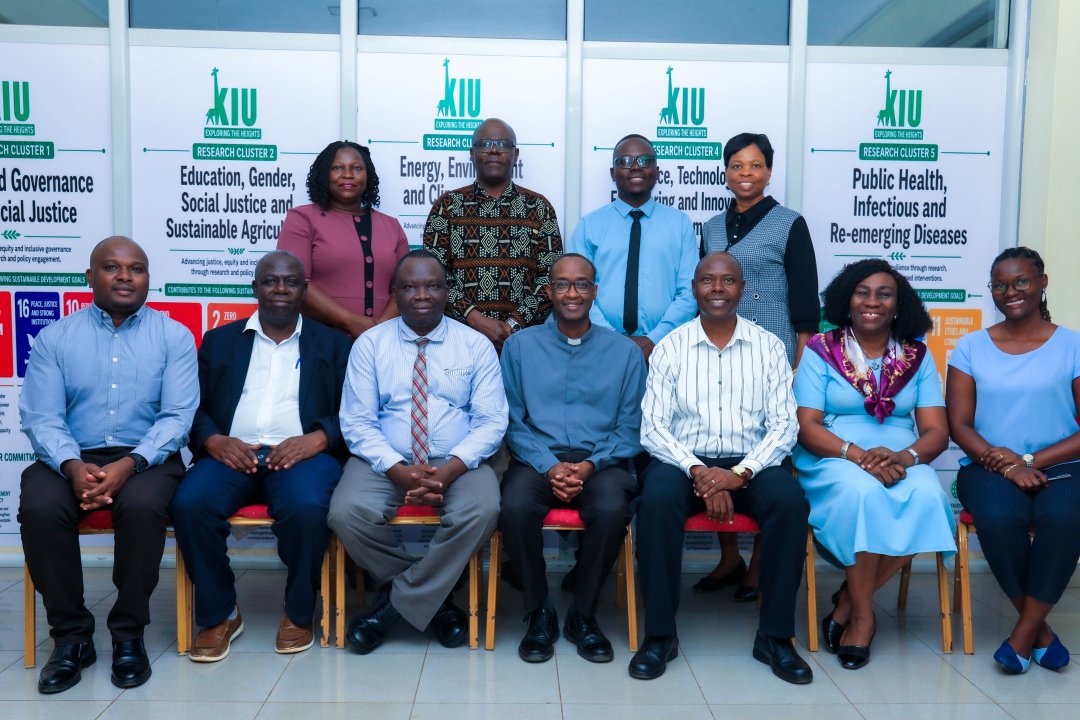
KIU, Main Campus - Kampala International University (KIU), in collaboration with the School of Law, hosted a meeting on Tuesday, 3rd November 2026, with distinguished legal scholar Dr. Augustine E. Arimoro, Senior Lecturer in Law at the School of Oriental and African Studies (SOAS), University of London, and Edward Wamala, a freelance legal research assistant and Master of Laws (LLM) student in Energy and Climate Change Law at Queen Mary University of London.
The visit focused on exploring a potential research partnership between KIU and the visiting scholars to undertake a pilot study examining the relationship between electoral laws, technology, and democratic processes. The proposed study is expected to inform a grant application that would support a larger research project, including a roundtable discussion involving key stakeholders.
Speaking during the meeting, Dr. Augustine E. Arimoro explained that the research team intends to investigate whether existing electoral laws adequately support the electoral processes across different countries.
“We intend to conduct a pilot study and organise a roundtable discussion to explore whether electoral laws effectively support elections in various jurisdictions. The pilot study will provide evidence that can strengthen our grant application and help secure funding for the broader research project,” he said.
Representing the Directorate of Research, Innovations, Consultancy and Extensions, Prof. Regina Ejemot Nwadiaro, Deputy Vice Chancellor, welcomed the proposed collaboration, noting that KIU remains committed to building strategic partnerships that advance research and innovation.
“It is always a pleasure when researchers choose KIU as a partner. This collaboration presents an opportunity to expand our research network and contribute meaningful expertise to an important area of study. As a directorate, we can support the project by providing methodological guidance and scholarly input that will strengthen the pilot study,” she said.
Prof. Nwadiaro further advised the research team to broaden the scope of the study by examining the policy environment surrounding electoral processes and the impact of technology on democratic participation.
“You also need to focus on how policies are formulated because many factors influence electoral processes. We should examine the priorities surrounding electoral technology and assess how it has affected public participation in elections. In some countries, including Uganda, internet access has been restricted during election periods,” she said.
“Such issues provide valuable insights and can help build a strong case for the grant application because they directly affect democratic engagement,” Prof. Nwadiaro noted.
She emphasised the need for the research to identify gaps within electoral governance systems and generate evidence-based recommendations that can contribute to policy discussions on technology, elections, and citizen participation.
The proposed partnership reflects KIU’s growing commitment to collaborative research, international engagement, and the generation of knowledge that addresses contemporary governance and societal challenges. Through such collaborations, the university continues to strengthen its position as a hub for impactful research, innovation, and academic excellence.
The meeting concluded on a positive note, with both parties expressing interest in advancing the partnership. The collaboration is expected to strengthen the proposed pilot study, support future grant applications, and contribute to ongoing discussions on the role of technology in electoral processes and democratic participation.