IRDeC 2026: KIU is Reimagining Africa's Development Agenda
- Agnes Kiconco
- /
- October 15, 2026
- 22
By Hattie Wright
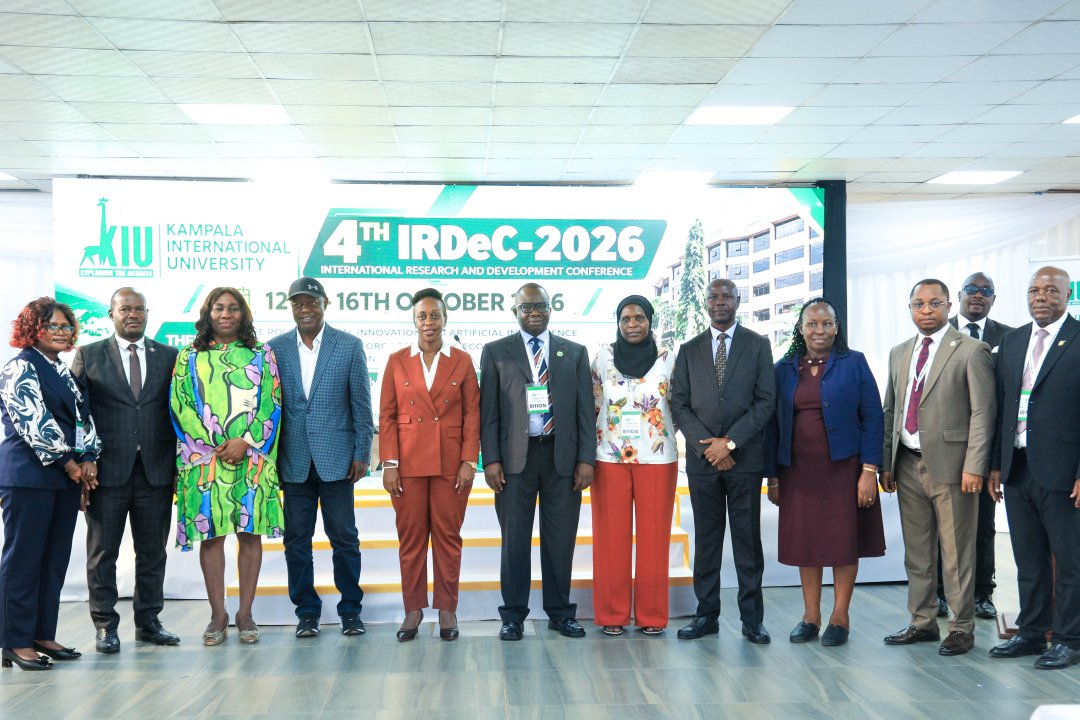
KIU, Main Campus - From Monday 12th to 14th October, 2026, Kampala International University (KIU) became more than a centre of learning. It transformed into a meeting point for ideas, innovation, and conversations about the future of Africa in an increasingly digital world.
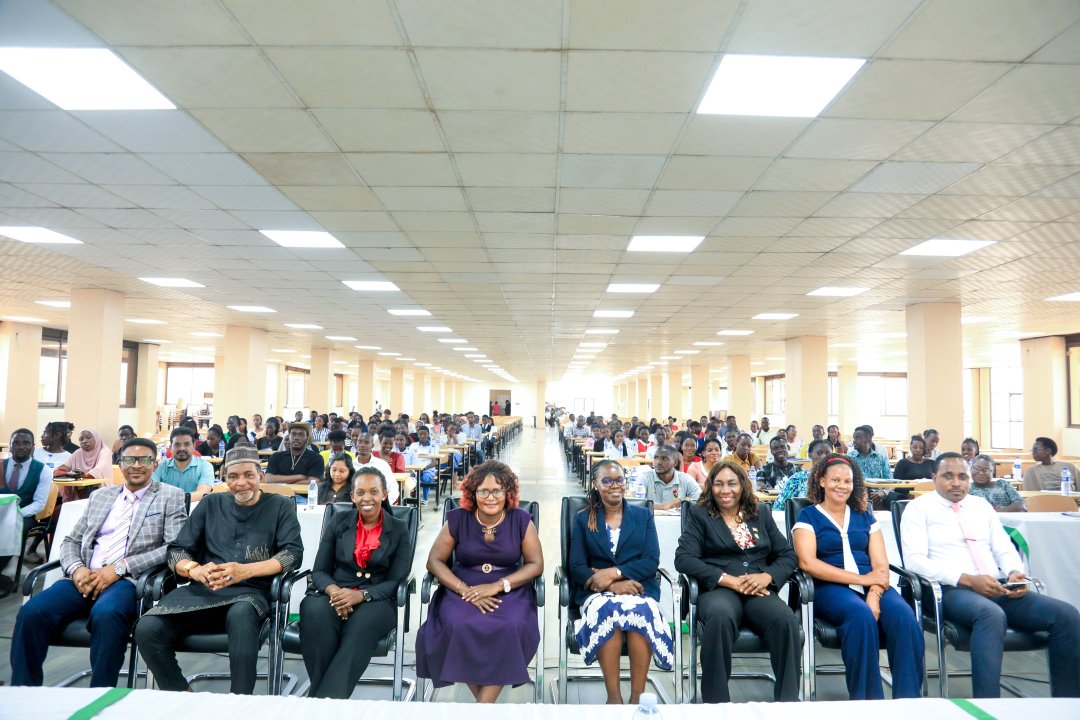
From academicians, policymakers to innovators, researchers, and students, all participants gathered at the University's Main Campus for the 4th International Research and Development Conference (IRDeC) 2026, held under the theme: "The Role of Digital Innovation and Artificial Intelligence in Advancing Workforce Efficiency, Economic Transformation and Industrialisation."
At a time when Artificial Intelligence (AI) is changing how people learn, work, communicate, and conduct business, the conference provided a timely platform to explore both the opportunities and challenges presented by emerging technologies.
Beyond the keynote addresses, research presentations, and innovation exhibitions, the conference raised an important question: How can Africa harness digital innovation to drive meaningful and inclusive development?
Opening the conference, Dr. Mustafa Mundu, Deputy Vice Chancellor for Finance and Administration, who represented Prof. Ngoma Muhammed, Vice Chancellor, challenged universities to rethink their role in a rapidly evolving world.
He noted that institutions of higher learning can no longer focus solely on producing graduates seeking employment. Instead, universities must equip learners with the skills and mindset needed to become innovators, creators, and problem-solvers capable of responding to societal challenges.
His message echoed one of the key themes running throughout the conference: the future belongs not only to those who understand technology but also to those who can apply it to improve lives and create opportunities.
Research as a Driver of Development
Representing Hon. Dr. Hassan Basajjabalaba, Chairman of the Board of Trustees, Ambrose Kibuuka, Board Member highlighted the critical role of research and innovation in shaping national development.
He pointed to KIU's growing investments in research, innovation systems, online learning platforms, and the Digital Innovation Hub as evidence of the University's commitment to generating solutions for real-world challenges.
For Kibuuka, research should not remain confined to academic journals. Instead, it must influence decision-making, inspire innovation, and ultimately improve people's lives.
His remarks reinforced the University's vision of becoming a research-driven institution that contributes directly to socio-economic transformation.
Digital Transformation Requires Digital Skills
As governments around the world race to position themselves for the Fourth Industrial Revolution, the importance of digital skills took centre stage at the conference.
Representing Dr. Aminah Zawedde, Permanent Secretary of the Ministry of ICT and National Guidance, Eng. Irene Karungi Sekitoleko, Senior ICT Infrastructure Engineer at the Ministry of ICT and National Guidance, observed that AI and emerging technologies are increasingly becoming drivers of economic growth, industrialisation, and workforce productivity.
She stressed the need to equip young people with digital competencies that will enable them to compete in the global economy.
Her presentation also highlighted Uganda's ongoing efforts to develop a National Artificial Intelligence and Emerging Technology Strategy aimed at guiding the adoption of technologies such as AI, Blockchain, Robotics, Internet of Things (IoT), drones, and big data analytics.
The message was clear: technological advancement must be accompanied by deliberate investment in human capital.
Africa's Place in the AI Revolution
One of the most anticipated sessions was the keynote address delivered by Prof. Waswa Balunywa an Economist and former Makerere University Business School Principal who acknowledged the transformative potential of Artificial Intelligence in all sectors ranging from agriculture to health.
He challenged participants to look beyond technology itself and focus on how it can be used to address Africa's development challenges.
According to Prof. Balunywa, many African countries continue to face barriers such as limited infrastructure, affordability constraints, low digital literacy levels, and the digital divide.
To these barriers, he prescribed encouraging signs; the expansion of internet access, increasing mobile phone penetration, growth in mobile money services, and the rise of technology hubs and start-ups across the continent.
His most memorable remark "AI cannot tell you what you do not know," sipped in amidst discussions regarding the limitations of AI.
The statement served as a reminder that knowledge, creativity, and critical thinking remain fundamental, even in an era of intelligent machines.
Innovation on Display
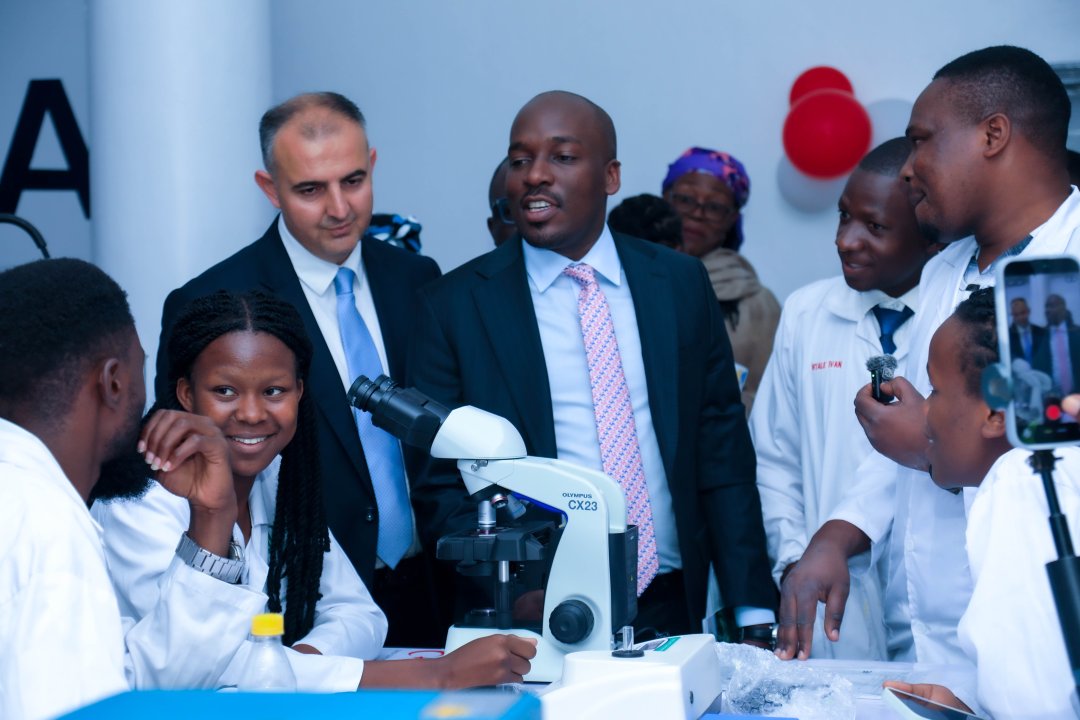
While discussions dominated the conference halls, innovation took centre stage in the exhibition area.
Students and researchers showcased practical solutions designed to solve real-world problems.
Among the standout innovations were:
· The Smart Storage Locker System; aimed at improving secure storage management.
· The Black-G Universal DNA Extraction Kit; a locally developed biotechnology solution supporting diagnostics and research.
· The Autonomous Emergency Logistics Drone; designed to facilitate delivery of essential medical supplies to remote communities.
· A Hybrid Micro-Grid Installation and Optimisation Project; focused on improving sustainable energy access.
The innovations reflected a growing culture of research-driven problem-solving and demonstrated how universities can contribute directly to societal development.
For many participants, the exhibition served as tangible proof that innovation can thrive when research is linked to practical application.
Scholarship Beyond Borders
The conference also highlighted the increasing importance of international collaboration in research and innovation.
In a closing ceremony graced by Her Excellency Misitura Abdulraheem, Nigeria's Ambassador to Uganda. The Ambassador commended KIU for strengthening academic and research linkages between Uganda and Nigeria, noting that the large number of Nigerian academicians participating in the conference reflects the strong educational relationship between the two countries.
She further praised KIU's growing research profile and acknowledged the recent recognition of three Nigerian-origin KIU academicians in the Stanford/Elsevier Top 2% Scientists Ranking.
Her remarks underscored the role universities play in fostering regional cooperation and knowledge exchange across borders.
From Conversation to Action
As the conference drew to a close, speakers repeatedly emphasised that the value of IRDeC 2026 would not be measured by the discussions held during the event alone.
Prof. Charles Waiswa, Director of the Directorate of Higher Degrees and Research, encouraged participants to take the knowledge acquired during the conference back to their institutions and communities.
Similarly, Prof. Regina Ejemot Nwadiaro, Deputy Vice Chancellor for Research, Innovation, Consultancy and Extension, challenged delegates to convert ideas into action, partnerships into projects, and research into solutions that address pressing societal needs.
Their message reflected the broader purpose of the conference: ensuring that research and innovation have a lasting impact beyond the lecture room.
A Conference with Purpose
IRDeC 2026 was more than an academic gathering. It was a reflection of KIU's growing role as a hub for research, innovation, and thought leadership in the region.
Through engaging discussions, groundbreaking research presentations, innovative exhibitions, and cross-sector collaboration, the conference demonstrated that the future of development will be shaped by institutions that embrace knowledge, technology, and partnerships.
As delegates departed with new ideas, networks, and opportunities, one thing was clear: the conversation about digital innovation and Artificial Intelligence is no longer about the future. It is about the present.
Through initiatives like IRDeC, KIU is shaping the future one innovation, one research project and one partnership at a time.