JRS Engages KIU on Scholarships, Research and Student Placement Opportunities
- Agnes Kiconco
- /
- October 19, 2026
- 63
By Hattie Wright
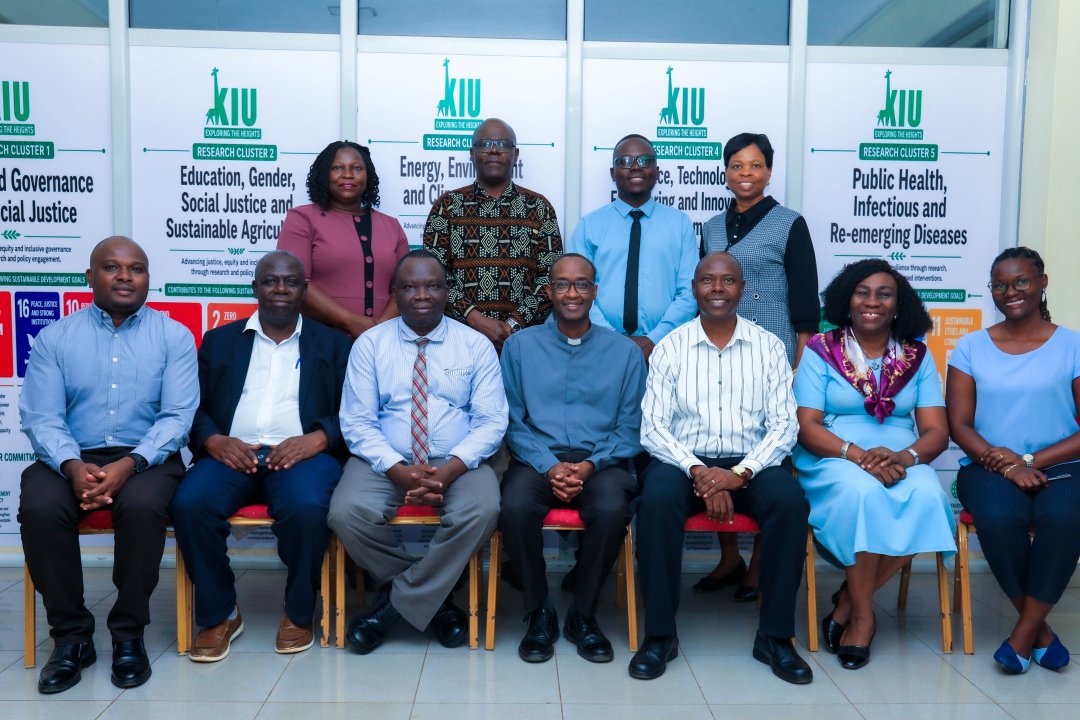
KIU, Main Campus: On Monday, 19th October 2026, Jesuit Refugee Service (JRS), an international Catholic non-profit organisation founded in 1980, paid a courtesy visit to Kampala International University (KIU) to explore potential areas of collaboration. JRS's mission is to accompany, serve, and advocate for refugees, asylum seekers, and forcibly displaced persons worldwide.
Welcoming the delegation, Dr. Mustafa Mundu, Deputy Vice Chancellor for Finance and Administration, expressed KIU's readiness to collaborate with JRS in areas that advance education, research, and community service. He assured the JRS team that KIU's diverse student population includes learners from many nationalities, including Somali-speaking students who can effectively communicate in both English and Somali.
Dr. Mundu further highlighted KIU's commitment to widening access to higher education through its scholarship programmes, including a 50 per cent tuition scholarship scheme. He emphasised the university's strong research culture, noting that research remains central to KIU's mission.
"Research is the food of KIU. We turn data into knowledge by transforming it into shared information," he remarked.
Christine Ainebyoona, Campus Administrator and Deputy University Secretary, welcomed the JRS delegation and noted that the partnership would create valuable opportunities for students while strengthening KIU's commitment to community engagement and social impact.
Fr. Paul Kalenzi, Country Director of JRS Uganda, highlighted JRS's efforts in providing critical support to refugees living in urban settings and refugee settlements across Uganda. He noted that the organisation offers numerous tertiary education scholarships, particularly targeting women and other vulnerable groups.
He also revealed several opportunities available through JRS, including internships, volunteer placements, graduate trainee positions, and research collaborations. These opportunities are particularly relevant to students and graduates in psychology, counselling, social work, and English language studies. In addition, JRS is seeking individuals with Arabic and Somali language translation skills, while opportunities also exist in finance, accounting, ICT, and other support services.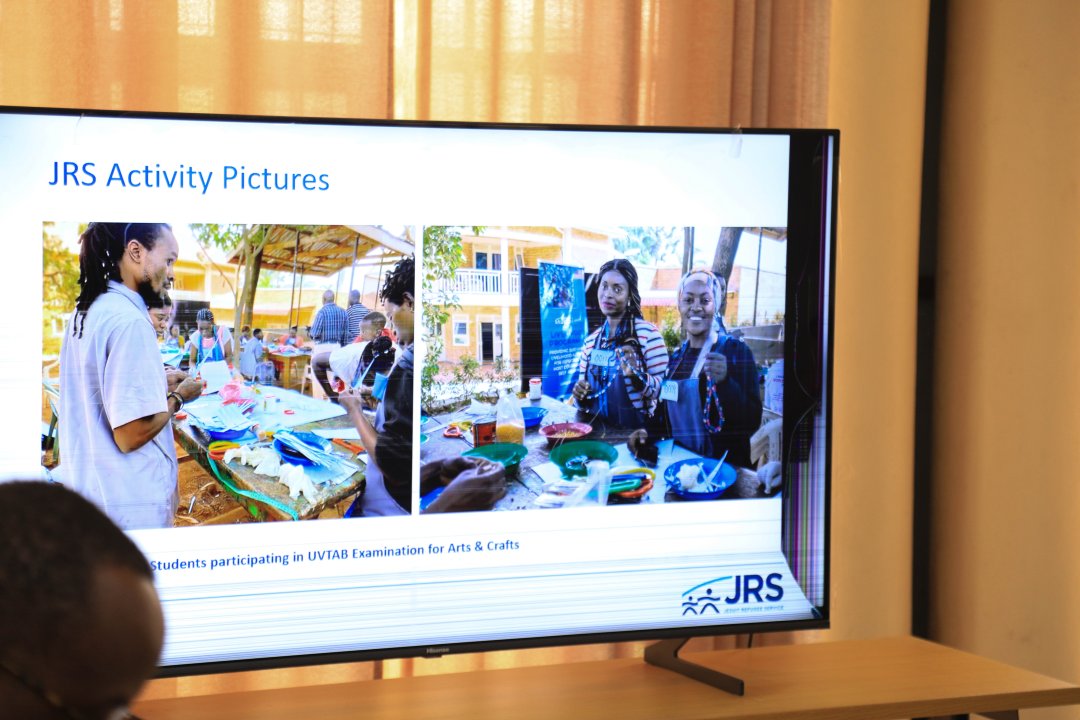
Eugen Emuron, Country Programmes Manager, provided an overview of JRS operations, noting that the organisation supports more than 300 individuals from diverse nationalities annually. He emphasised that education remains one of the most powerful tools for transforming lives and empowering displaced communities.
Emuron further explained that JRS is guided by Catholic values as a faith-based organisation and expressed the organisation's interest in partnering with KIU on internships, volunteer programmes, student placements, scientific research, and future grant opportunities.
Discussion and Q&A Session
During the discussion, Dr. Dorcus Olaniyan, Internship Manager, observed that students from ICT and Applied Statistics programmes have frequently expressed interest in internship opportunities of this nature. She pledged to disseminate the opportunities to students pursuing Social Work, Human Resource Management, Economics, and Management programmes.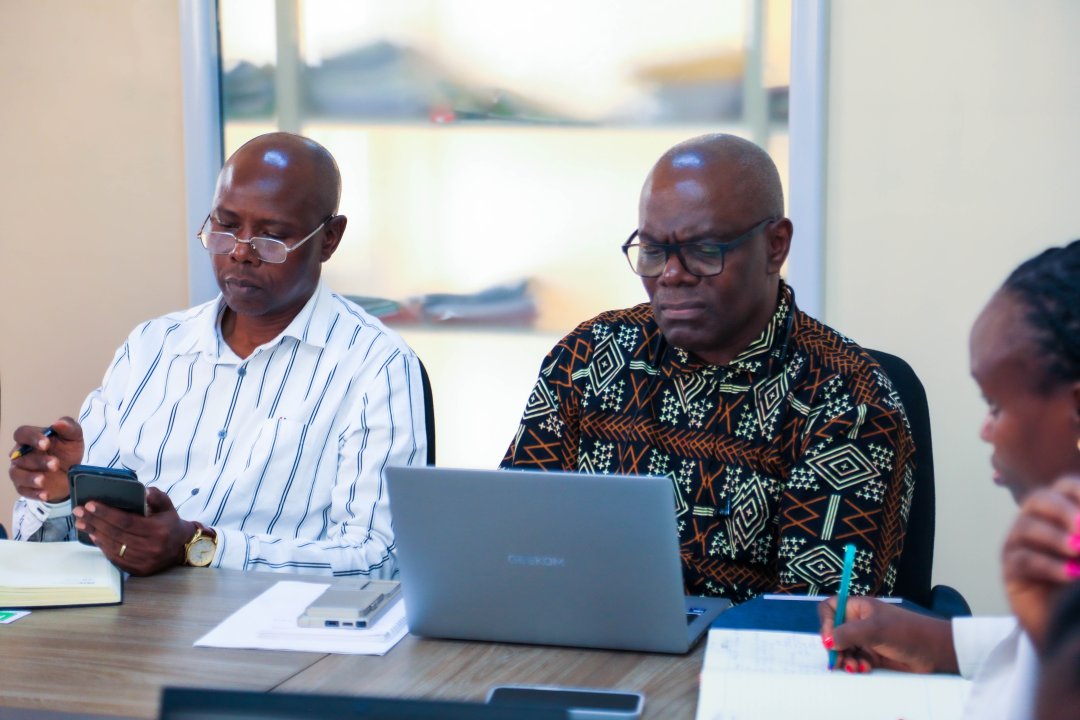
Ambrose Kibuuka, KIU Board Member, described the engagement as an exciting and promising conversation, thanking JRS for what he termed a "blank cheque of opportunities" for KIU students and staff. He noted that both KIU and JRS share a common commitment to serving humanity and supporting vulnerable communities.
Kibuuka further observed that JRS has played a significant role in supporting refugees over the years and highlighted the potential for collaboration in documenting the organisation's work through research and evidence-based reporting. He noted that many KIU staff members would be eager to undertake studies focusing on refugee welfare, resilience, and development.
As part of the discussions, he also suggested the use of filmmaking and storytelling as therapeutic tools for refugees, explaining that creative expression can help individuals process experiences, build resilience, and share their stories with wider audiences.
Delivering the closing remarks, Prof. Regina Ejemot Nwadiaro, Deputy Vice Chancellor for Research, Innovations, Consultancy and Extension, emphasised the importance of involving refugee communities in research and community engagement initiatives.
"Our refugee communities must be involved because they can point us to issues and challenges that we may otherwise overlook," she noted.
Prof. Nwadiaro thanked the JRS delegation for their interest in partnering with KIU and officially closed the meeting.
Conclusion
The meeting underscored strong prospects for collaboration between KIU and JRS in education, research, internships, volunteerism, and community engagement. Both institutions expressed a commitment to developing partnerships that will enhance student opportunities while contributing to the welfare, empowerment, and inclusion of refugees and displaced communities in Uganda.