KIU and APHRC Begin Site Preparations for Federated Stroke Data Research
- Nakanwagi Annet
- /
- September 22, 2026
- 322

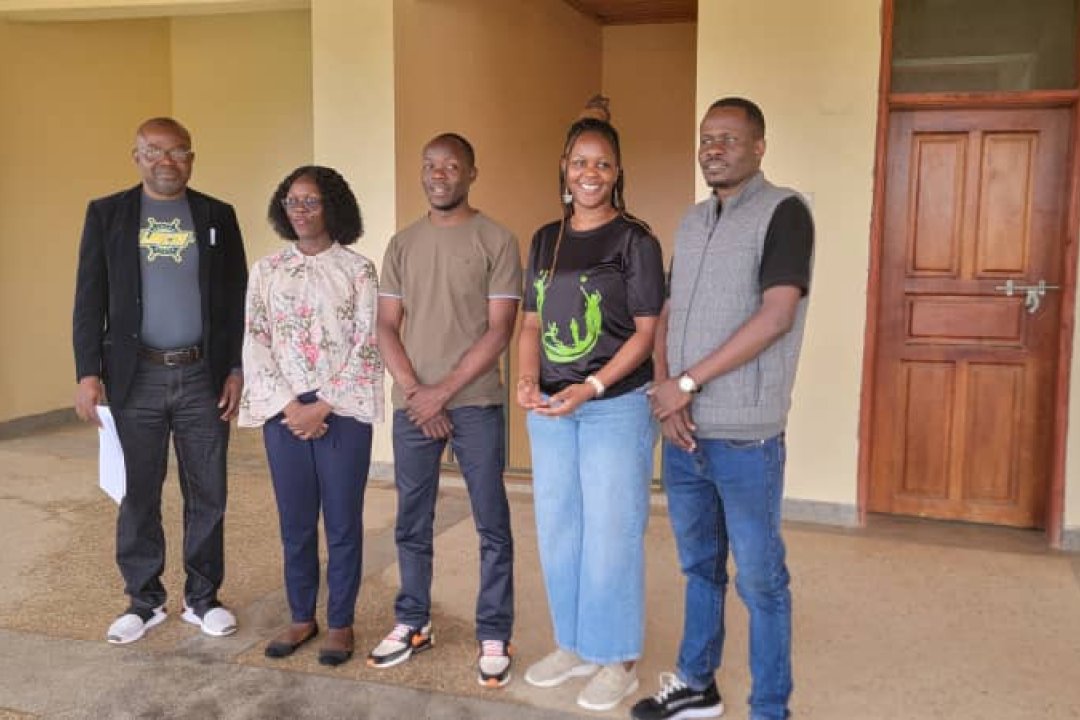
KIU, Western Campus - On Monday, September 21st, 2026, Kampala International University (KIU) commenced pre-assessment and site-preparation activities at the KIU Teaching Hospital and Research (KIUTHR) for the deployment of a federated stroke-data research system, marking a key step in its collaboration with the African Population and Health Research Centre (APHRC).
The five-day exercise, running through Friday, September 25th, brings together the APHRC technical team and KIU’s project leadership, data-management and ICT teams to assess site readiness, review data-management processes and prepare the technical environment required for secure federated stroke-data analysis. The activities are being undertaken ahead of the project’s implementation phase, scheduled to run from October to December 2026.
The APHRC team arrived at KIU Western Campus on Sunday, September 20th, ahead of the exercise. Led by Dr. Damazo Kadengye and accompanied by APHRC Data Managers Susan Nakasendwa, Michael Ochola and Silas Ooko, the team is supporting the transition from project planning to practical preparation for deployment and operationalization of the federated data-analysis infrastructure.
The collaboration, formalized through a Memorandum of Understanding between APHRC and KIU, was facilitated by Dr. Kadengye and Dr. Agnes Kiragga of APHRC, whose engagement helped advance the partnership towards implementation of the Federated Analysis of Stroke Data Project at the KIUTHR site.
Turning KIUTHR’s Stroke Records into Research Evidence
The Federated Analysis of Stroke Data Project is supported by a total award grant of USD 15,000, covering personnel effort, data management, ICT infrastructure, ethical and regulatory processes, data extraction and mapping, as well as institutional project-support costs.
As part of the project, KIU will deploy DataSHIELD and an Opal server within its local digital infrastructure. The system will enable collaborative analysis while allowing individual-level patient information to remain within KIU’s secure institutional environment.
The initiative will draw on KIUTHR’s extensive retrospective stroke patient records spanning 2015 to 2026. The records contain information including patient demographics, clinical presentation, comorbidities such as hypertension and diabetes, CT findings distinguishing ischaemic and haemorrhagic stroke, and discharge outcomes.
Before analysis, the data will undergo appropriate extraction, de-identification and harmonization using the OMOP Common Data Model. This will support the creation of standardized, high-quality datasets for multi-country research while KIU retains institutional control over the underlying patient-level data.
The federated approach will also facilitate collaborative research involving KIU and participating institutions in Côte d’Ivoire, Burkina Faso, Cameroon and Senegal without requiring routine cross-border transfer of sensitive patient-level information.
Protecting Patient Data
Data privacy, security and institutional ownership remain central to the project. Raw patient data will not be transferred externally, with DataSHIELD enabling approved statistical analyses while the underlying datasets remain securely hosted within KIU.
Direct identifiers will be removed during data preparation, while the Partner Agreement requires APHRC and participating institutions to maintain confidentiality and comply with agreed data-protection requirements.
KIU’s Multidisciplinary Implementation Team
Implementation at KIU brings together expertise in clinical medicine, stroke research, hospital leadership, research coordination, data management, information technology, health informatics and institutional project management.
The team includes Prof. Patrick Aja Maduabuchi, Project Site Coordinator; Dr. Umi Omar Bunu, CEO of KIUTHR and Deputy Project Site Coordinator; Dr. Emmanuel Okurut, Lead Principal Investigator and Stroke Researcher; Paul Akampurira, Data Manager; Michael Owiri, Assistant Data Manager; Dr. Sadiq Bashir Olaniyi, ICT Infrastructure and Security Lead; and Engr. Chidiebere Uwabunkenyonye, ICT Technical Support.
Together, the team will oversee institutional coordination, site readiness, clinical and scientific leadership, data extraction and harmonization, as well as the installation, configuration, security and maintenance of the Opal and DataSHIELD infrastructure.
Building Research and Data-Science Capacity
Beyond the research outputs, the project is expected to strengthen practical capacity among KIU faculty, researchers, ICT personnel and students in federated analysis, data governance, database management, health informatics and secure health-data infrastructure.
Students and faculty from programmes including the Master of Medicine in Internal Medicine, MSc Health Informatics and BSc Computer Science are expected to benefit from exposure to the project, contributing to the development of African clinician-researchers, data scientists, health informaticians and ICT professionals.
The initiative also builds on KIU’s previous engagement with APHRC through the No-Code (CODEX) Data Science Training and the ongoing Data Science Without Borders (DSWB) programme.
Strengthening Future Research
APHRC will provide overall guidance, oversight, technical assistance and leadership, while KIU will undertake its assigned responsibilities in accordance with the project work plan, budget and regulatory requirements.
Beyond the initial project period, KIU plans to maintain the Opal and DataSHIELD infrastructure and integrate the knowledge and skills gained into its academic and research activities. This is expected to strengthen KIU’s capacity to participate in future multi-country health research collaborations, competitive grant applications and large-scale African data-science initiatives.
With the KIUTHR site-preparation exercise now underway, KIU is moving closer to operationalizing a secure platform through which its stroke data can contribute to collaborative research beyond institutional and national boundaries.
The initiative marks an important step in strengthening KIU’s contribution to stroke research, digital health, data science and health informatics, while supporting broader African efforts to generate high-quality evidence that can inform improved health systems and patient outcomes.