KIU Helps Drive Open Innovation, Smart Cities in Erasmus+ SHAPE Project
- Agnes Kiconco
- /
- October 01, 2026
- 281
KIU, Main Campus - Kampala International University (KIU) is taking a key role in advancing open innovation and smart city capacity in East Africa through the Smart City Higher Education Advancement Program in East Africa (SHAPE). The programme is an Erasmus+ Capacity Building in Higher Education initiative funded by the European Union.
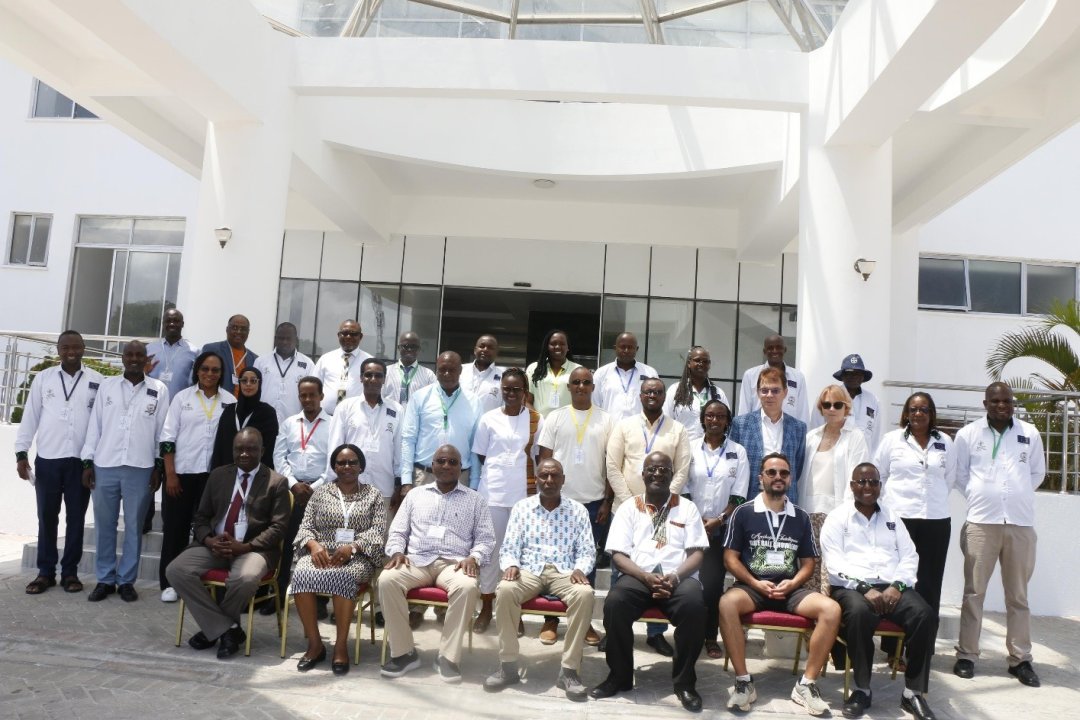
KIU joined fellow SHAPE consortium partners for the first physical Partners Meeting, held from Monday, 28th September to Friday, 2nd October 2026 at the Kenya School of Government in Mombasa, Kenya. The meeting reviewed implementation progress, work packages, timelines and key deliverables, and set the pathway for strengthening smart city education, innovation and institutional capacity in the region.
KIU was represented by Dr. Mundu Mustafa, Deputy Vice Chancellor, Finance and Administration, and Gloria Mahoro, Manager of Grants and Partnerships. They took part in the consortium discussions, including deliberations on KIU's contribution to the project's Open Innovation component.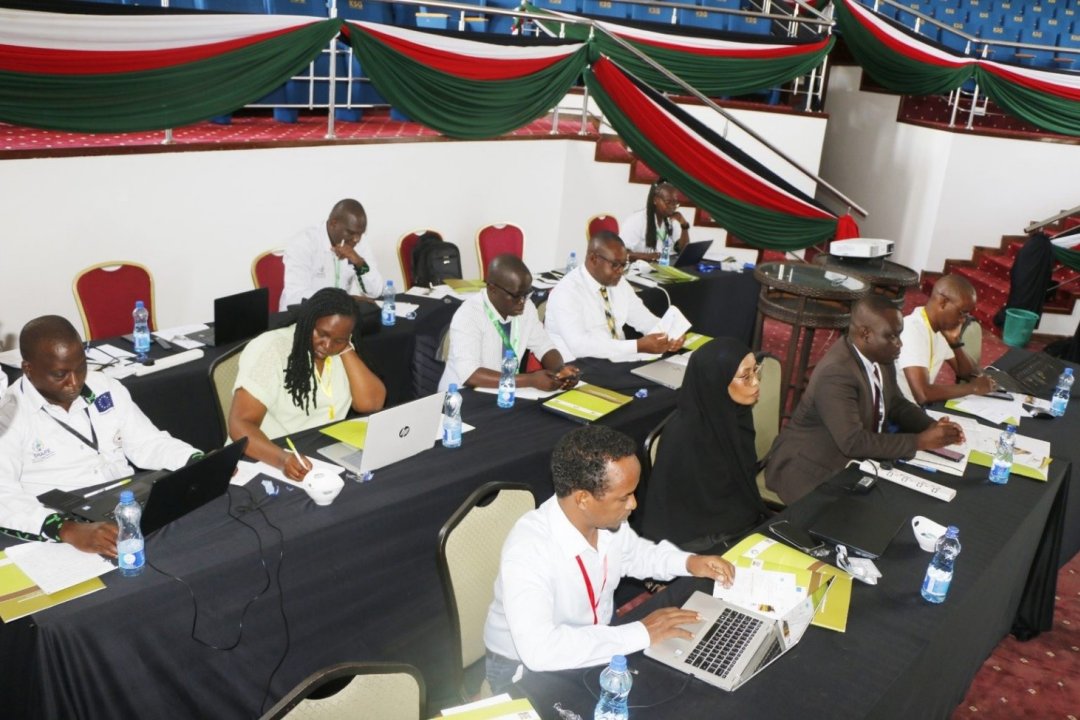
SHAPE brings together nine institutions from East Africa and Europe. From Kenya, they are Moi University and the Open University of Kenya. From Uganda, they are KIU and Makerere University. Red Sea University and Mogadishu University represent Somalia. The European partners are Otto von Guericke University Magdeburg in Germany, the University of Tartu in Estonia and the Lithuanian University of Health Sciences in Lithuania. Together they span three East African countries and three European Union member states.
The project is coordinated by Moi University, with Prof. Eng. Kiriamiti as overall SHAPE Project Coordinator. In his remarks, Prof. Kiriamiti identified the shortage of appropriately skilled human capital as one of the biggest barriers to developing and sustaining smart cities in Africa. He stressed that technological advancement must go hand in hand with relevant skills, effective knowledge transfer and stronger stakeholder and community participation.
SHAPE seeks to transform higher education in Kenya, Uganda and Somalia to build a workforce able to create, expand and sustain smart cities in the region. Its objectives include a smart city skills needs assessment, a joint curriculum, training of trainers, virtual exchanges between African and European universities, an EU and East Africa Smart Cities Alliance, open innovation hackathons and Open Innovation Labs at the African partner universities.
A significant part of KIU's participation is its responsibility under Work Package 4 (WP4), Smart City Acceleration and Open Innovation. The project framework specifically assigns KIU the delivery of Open Innovation Labs, while the University of Tartu, KIU and Makerere University hold key roles in implementing the work package.
WP4 will turn the knowledge and academic capacity built through the project into practical innovation activities. These include Open Innovation Labs, mentor and facilitator training, smart city hackathons and impactathons, virtual exchanges, and the development of the EU and East Africa Smart Cities Network. The project targets six Open Innovation Labs across the African partner universities, alongside three labs that will host hackathons. The consortium will also produce a Training of Trainers Handbook for Innovation Labs, launch the labs and run three Open Innovation Hackathons.
Dr. Mustafa said KIU sees the lab as more than a building and equipment.
“For KIU, the Open Innovation Lab should not simply be a physical space or a collection of equipment. We see it as a platform that brings together students, researchers, industry, government and communities to identify real challenges, co-create solutions, develop prototypes and translate university knowledge into tangible societal impact,” Dr. Mustafa said.
He noted that the initiative offers a chance to connect KIU's teaching and research more closely with innovation and practical problem solving.
“Universities must increasingly demonstrate how the knowledge they generate contributes to solving the challenges around them. Through SHAPE, we have an opportunity to connect teaching and research with open innovation and provide our young people with an environment in which ideas can be developed, tested and transformed into solutions,” he added.
The Open Innovation component will be supported by SHAPE's wider academic capacity building programme. The project will develop master's level learning in Urban Mobility, Open Data, Artificial Intelligence, Smart Energy and the Built Environment, Smart Health, and Community Engagement. A Training of Trainers programme will help participating universities sustain smart city expertise. Prof. Kiriamiti said the project targets 12 new courses across six African universities, virtual mobility for 60 academic staff and the six Open Innovation Labs. Findings from the smart city needs analysis will shape the curriculum, which in turn feeds into training, laboratories, hackathons and other practical activities.
Dr. Dimitris Symeonidis of the University of Tartu urged partners to keep implementation closely aligned with agreed timelines and deliverables. He called for continuous tracking of progress and for reporting through the relevant EU project portal to strengthen accountability and ensure timely delivery. This reflects SHAPE's structure, which sets specific deadlines for deliverables and milestones over its 36 months, with quality assurance, peer review and monitoring through a Monitoring, Evaluation, Accountability and Learning framework.
Dr. Mustafa said SHAPE's strength lies in treating smart cities as more than a technology question.
“The strength of SHAPE is that we are not looking at smart cities purely as a technology question. We are looking at the people, skills, institutions and partnerships required to make these solutions sustainable. For KIU, our responsibility in Open Innovation gives us an opportunity to help bridge the gap between academic knowledge and practical implementation.”
The project's expected impact goes beyond curriculum and infrastructure. SHAPE aims to create opportunities for graduates in construction, education, training and renewable energy, while contributing to better urban sustainability through waste management, energy efficiency and green spaces. It also seeks to strengthen governance and decision making between the public and private sectors and to bring smart technologies into everyday urban life.
Sustainability after the 36 months is central to the plan. SHAPE envisages permanent smart city courses in university programmes, continued professional training, stronger links between universities and government, and a lasting EU and East Africa Smart City Alliance for joint research and knowledge exchange.
Dr. Mustafa said KIU's focus will be on ensuring the benefits outlast the funding.
“Our interest is to ensure that what is established through SHAPE continues to create value beyond the lifetime of the project. The Open Innovation Lab should become an enduring KIU platform for interdisciplinary innovation, partnerships and the development of solutions that respond to the changing needs of our cities and communities.”
Through its responsibility for delivering Open Innovation Labs, KIU is positioned to turn SHAPE's academic and capacity building work into practical innovation. It will also strengthen collaboration among universities, industry, government and communities in tackling the challenges of sustainable urban development in East Africa.