
KIU Strengthens Capacity for OMOP-Based Federated Health Data Analysis
- Nakanwagi Annet
- /
- October 06, 2026
- 374
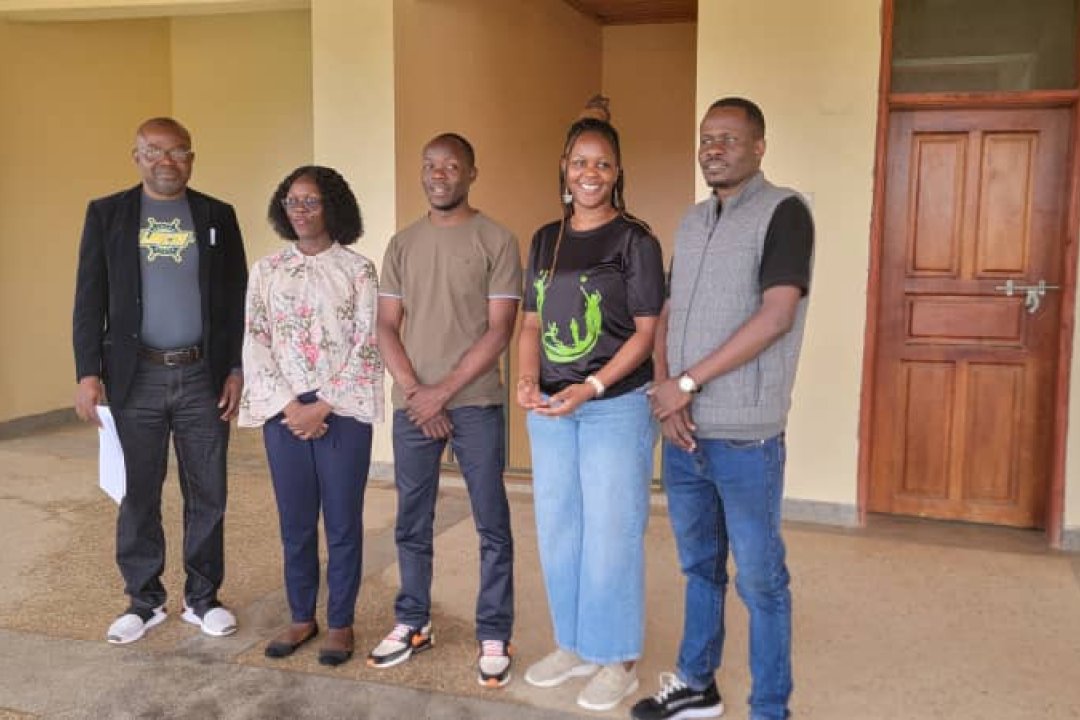
KIU, Western Campus – Following the completion of site-preparation activities conducted from September 21st to 25th, 2026, the African Population and Health Research Centre (APHRC) conducted a five-day capacity-building training that strengthened Kampala International University’s (KIU) clinical and research team’s capacity in the use of the Observational Medical Outcomes Partnership Common Data Model (OMOP CDM) for federated health data analysis.
The training, held from September 28th to October 2nd, 2026, brought together Clinical Health Officers (CHOs), medical specialists, biomedical scientists and other members of the clinical and research teams. It was facilitated by a delegation from APHRC, led by Dr. Damazo Kadengye and comprising data managers Susan Nakasendwa, Michael Ochola, Pauline Andeso, and Silas Ooko.
The training focused on the practical application of OMOP CDM in preparing, harmonising and managing clinical data for federated analysis. By providing a common structure for clinical datasets, OMOP enables data from different institutions to be prepared in a comparable format while the underlying patient-level information remains within its source institution.
The capacity-building exercise formed part of preparations for the implementation of the four-country project, “Piloting Federated Learning to Re-design Health Data Systems in Africa: A Four-Country Pilot of Privacy-Preserving Federated Analysis of Health Data in Côte d’Ivoire, Burkina Faso, Cameroon and Uganda,” coordinated by APHRC, with KIU serving as the participating institution in Uganda.
The project is built around an approach that enables institutions to collaborate on health research without routinely moving individual-level patient data from where it is held. Instead, data remain within participating institutions, approved analyses are conducted locally, and only non-disclosive summary results are shared.
For KIU, OMOP-based data harmonisation is therefore a crucial part of the research process. Selected datasets will be transformed into the OMOP CDM locally at each participating site, with de-identification also performed at source. This allows institutions to contribute to collaborative analyses without transferring individual-level data outside their facilities.
At KIU, the project is coordinated by Prof. Patrick Aja Maduabuchi, while Dr. Umi Omar Brunu, CEO of KIU Teaching Hospital and Research (KIUTHR), serves as the KIU Site Lead and Data Custodian. Their responsibilities include coordinating site activities, supporting ethical and institutional approvals, overseeing the custody of institutional data and ensuring appropriate authorisation for data access and use within the federated research framework.
The training therefore strengthened more than the team’s technical understanding of OMOP. It also enhanced KIU’s capacity in data harmonisation, governance and privacy-preserving research, supporting the institution’s participation in increasingly collaborative forms of health research.
At the conclusion of the training, Prof. Maduabuchi commended APHRC and the facilitating team for the intensive capacity-building programme. He noted that the training had strengthened the KIU team’s preparedness to undertake the data harmonisation, governance and analytical activities required for implementation of the project.
“The training has represented an important step towards strengthening KIUTHR’s capacity to participate effectively in secure, multi-institutional and multi-country health data research while maintaining institutional control of patient data and protecting confidentiality,” Prof. Maduabuchi noted.
With the infrastructure and technical expertise now being strengthened, KIU is positioning itself to contribute clinical data and research capacity to a broader African effort to generate evidence collaboratively while protecting patient privacy and institutional data stewardship.