KIU Unites Global Minds for Sustainable Innovation at 3rd International Research & Development Conference
- Agnes Kiconco
- /
- October 20, 2025
- 1089
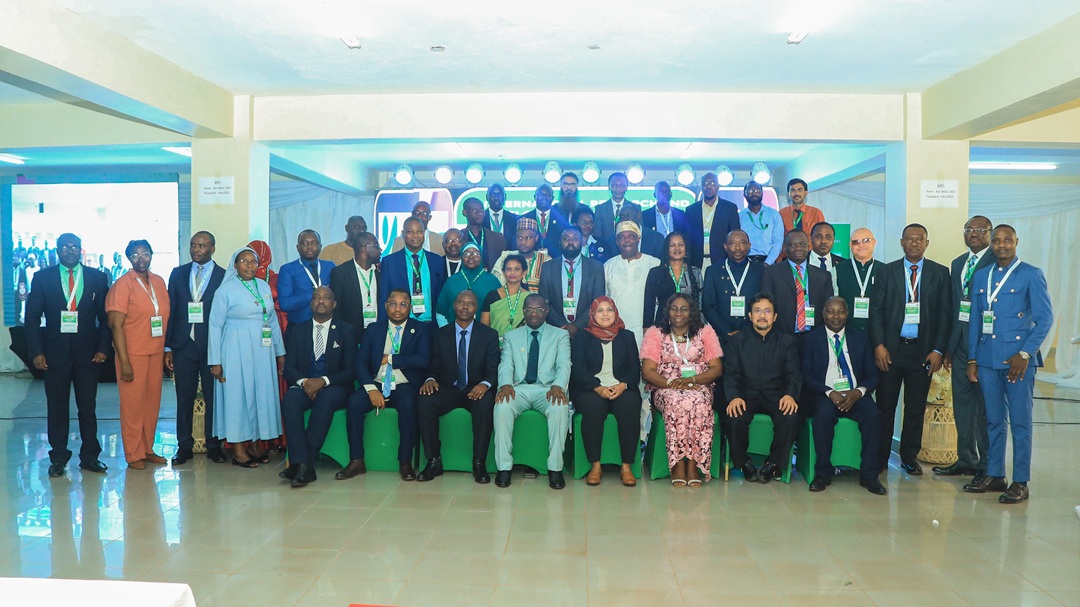
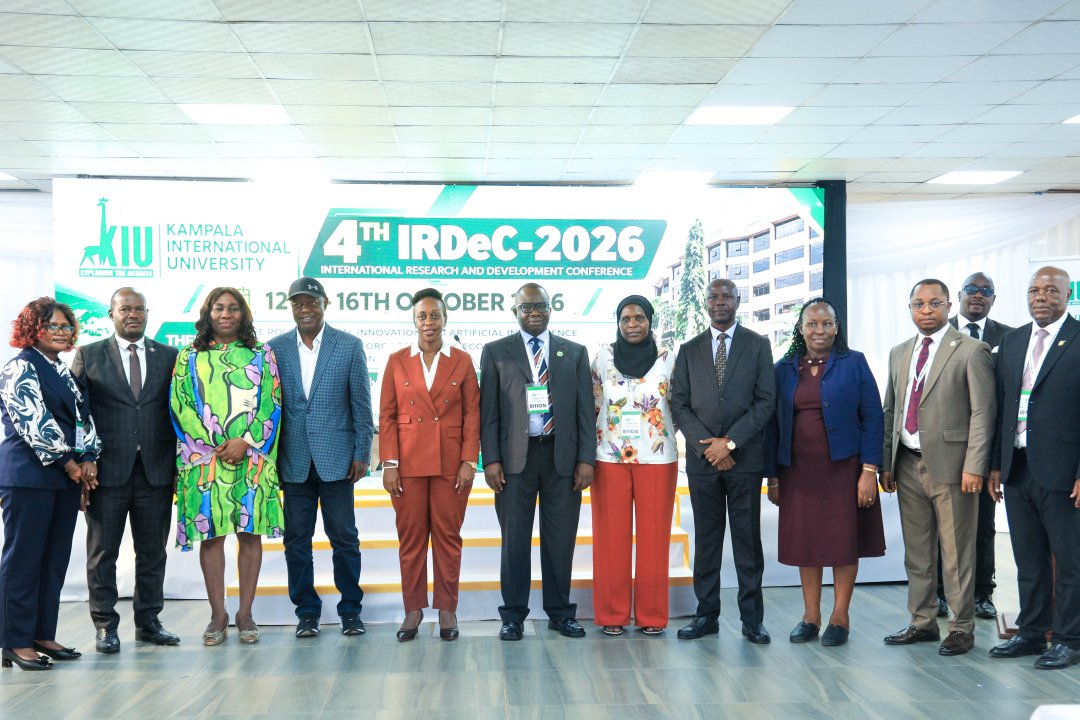
KIU, MAIN CAMPUS – Kampala International University (KIU) officially inaugurated the 3rd International Research and Development Conference on Tuesday, October 14, 2025, at its Main Campus along Ggaba–Kansanga Road, Kampala.
Held under the theme “Entrepreneurship and Innovation, Capacity Building, and Global Sustainability,” the global interdisciplinary gathering convened scholars, scientists, industry leaders, innovators, and policymakers from across the world to present research papers and deliver keynote speeches exploring the future of sustainable development.
Delivering the opening remarks, Prof. Muhammed Ngoma, Vice Chancellor, welcomed participants from across the globe, including India, the United States of America, the United Kingdom, South Africa, Botswana, Nigeria, Uganda, Kenya, Rwanda, Turkey, South Sudan, Burundi, Singapore, Zimbabwe, Cameroon, Malaysia, and China.
“To our international participants, we invite you to experience Uganda’s rich cultural heritage, warm hospitality, beautiful landscapes, favorable weather, and diverse cuisine,” Prof. Ngoma said. “We encourage you to explore our renowned tourist sites and embrace the vibrant spirit of our nation.”
He further announced that, as in previous years, accepted research papers would be published in reputable journals, including Taylor & Francis, reaffirming the conference’s commitment to academic excellence. “As with our previous years, the papers accepted for this conference will be published in reputable journals like Taylor & Francis, who have once again agreed to publish our proceedings,” Prof. Ngoma noted.
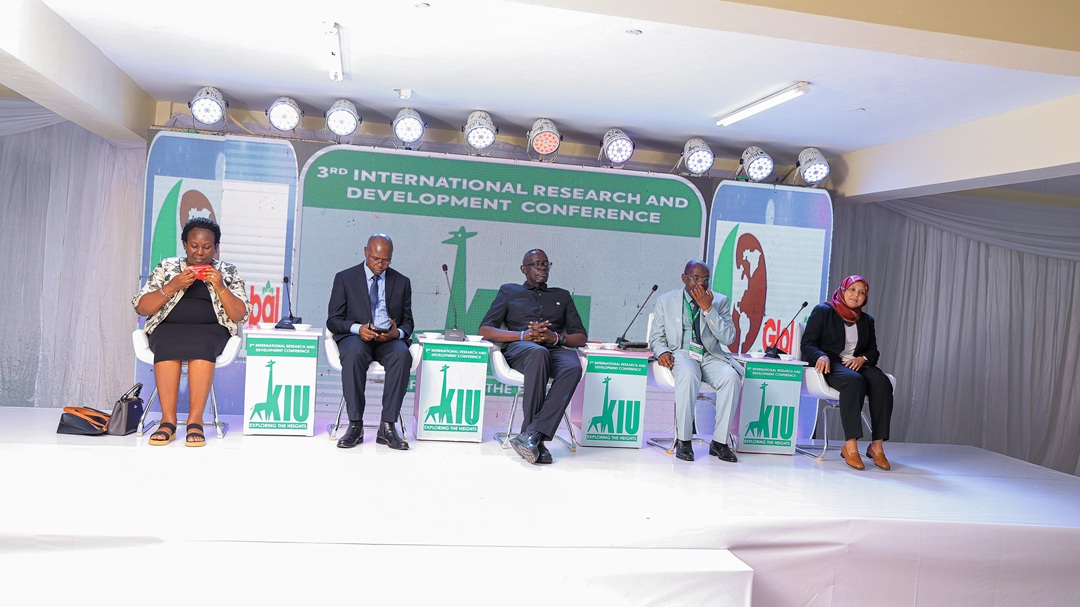
In a speech delivered by Ambrose Kibuuka, KIU Council Member, Al-Hajj Dr. (Hon.) Hassan Bassajjabalaba, Chairman Board of Trustees, said the year's theme—Innovation and Entrepreneurship, Capacity Building, and Global Sustainability—is both timely and strategic.
“These pillars are essential to Africa's transformation since innovation and entrepreneurship drive economic growth and job creation, capacity building strengthens institutions and human capital, and global sustainability ensures that development is inclusive, responsible, and future-oriented,” he emphasised.
Also serving as the National Chairman of the Entrepreneurs League of the National Resistance Movement, the Chairman Board of Trustees was particularly pleased in his speech that the conference aligns with national priorities of empowering citizens, nurturing innovation, and promoting an entrepreneurial culture that can propel Uganda and the African continent onto the global stage.
“We gather not only as academicians, practitioners, or policymakers, but as innovators, builders, and drivers of sustainable development. The challenges we face are complex and interconnected, requiring collaboration across disciplines and sectors. Whether you are an economist, scientist, engineer, sociologist, health expert, or policy analyst, your contribution is essential,” he encouraged, adding, “Each of you holds unique expertise, and together you form a collective force capable of delivering impactful solutions because true innovation often emerges at the intersection of diverse perspectives.”

In unison, the Guest of Honor, Hon. Dr. John Chrysestom Muyingo, State Minister for Higher Education, in a speech delivered by Timothy Musoke Ssejjoba, Assistant Commissioner, University Education & Training, Ministry of Education and Sports, said solutions that are relevant, affordable, and sustainable—when paired with sustainability principles, entrepreneurship, and innovation—become powerful tools for long-term prosperity and resilience.
“As a country, we recognize that no amount of economic ambition can be realized without a skilled, creative, and competent population, which is why the Ministry of Education and Sports has placed Competence-Based Education and Training at the center of Uganda’s reform agenda,” he said.
He added, “Through competence-based training, we are moving away from a system that rewards memorization to one that promotes creativity, problem-solving, and innovation. Learners are being empowered to apply knowledge, design solutions, and demonstrate practical competences relevant in the world of work.”
Hon. Muyingo’s speech further elaborated on how this paradigm shift is already being implemented in technical and vocational training, teacher education, and higher education institutions—all part and parcel of the aspiration of the Tenfold Growth Strategy.
“We therefore encourage universities to forge stronger partnerships with industry, local governments, and private sector actors to enhance research outtake and commercialization, because the success of our national innovation ecosystem depends on collaborative linkages,” he noted.
Hon. Muyingo also said, “The concept of global sustainability calls upon us to balance economic progress with social inclusion and environmental stewardship. Our education and research institutions, therefore, have a vital role to play in advancing sustainable solutions in agriculture, energy, waste management, and urban development.”
In summation of his speech, Hon. Muyingo called upon participants to aim at bridging the gap between the laboratory and the marketplace.
Backing this, Dr. Ezra Muhumuza Rubanda, Executive Director – Uganda Manufacturers Association, encouraged the integration of entrepreneurship education at all levels of education.
“It is no longer sufficient for our graduates to aspire for employment alone. They must be prepared to create employment,” he highlighted, adding that to achieve this ambitious vision, entrepreneurship and innovation are not optional, because entrepreneurship transforms ideas into enterprises, drives value addition, creates jobs, and innovation ensures the development of homegrown solutions to pressing challenges.
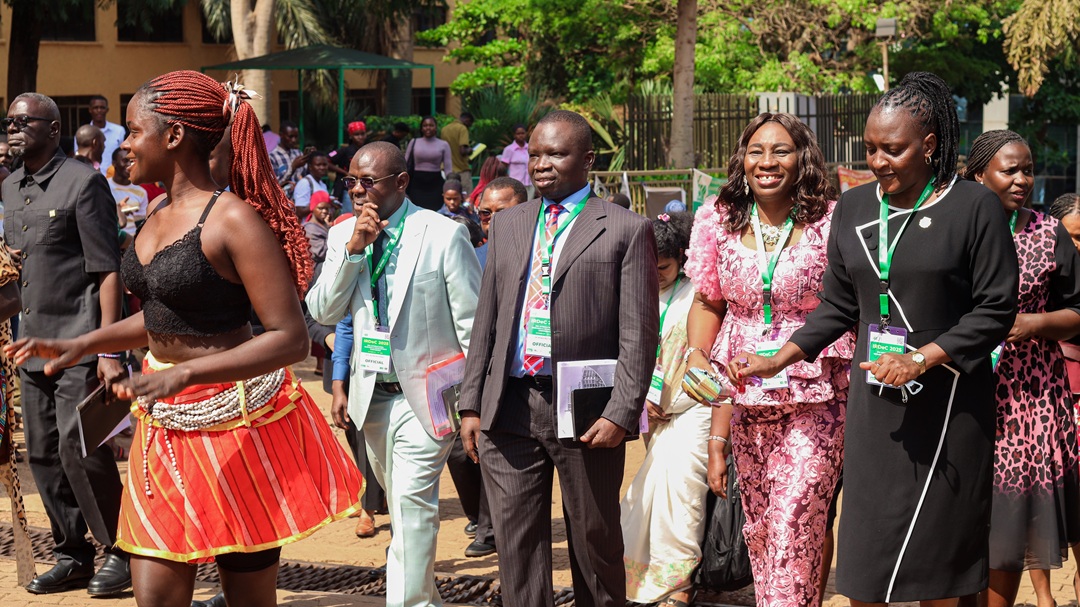
Leading the research paper presentations, Dr. Jenipher Twebaze Musoke, Research Coordinator at BRAC Africa, presented on the topic “From Innovation to Impact: Advancing Public Health Through Entrepreneurship, Capacity Building, and Global Sustainability.”
“Innovation begins when someone questions the status quo,” she said. “It disrupts routines, demands experimentation, and sometimes failure—but failure is tuition for success.”
She defined entrepreneurship as the engine that drives innovation, turning ideas into tangible impact. “Innovation is the idea, then entrepreneurship is the action. It is what transforms a vision into something tangible, something that feeds families and creates jobs, saves lives, and builds communities,” Dr. Twebaze added.
She further emphasized that entrepreneurship is not just about starting a business, but about taking initiative where others hesitate and seeing opportunity where others see obstacles. “Every structure, no matter how grand, like this one we are in, is only as strong as its foundation. So, whether we are talking about health, education, or business, that foundation is people. Innovation may help this path, and entrepreneurship may carry the claim, but only capacity building ensures that the fire does not die out,” she remarked.
In the second lead presentation, Assoc. Prof. Dr. Suraya Hanim Mokhtar, Director of the Centre of Excellence for Socio-Economic Development and Innovation at Albukhary International University, explored “Start with Purpose: Social Business for Social Change.”
“While running a business, you need to ask yourself whether you are running the business to solve an issue, because a business objective should be to overcome poverty or more problems which threaten people and society—not just profit maximisation,” Dr. Mokhtar said.
Panel discussions followed, with participants dissecting the presented research and exploring innovation, entrepreneurship, and capacity building as tools to combat poverty in developing nations.
Summing up the discussions, Prof. Waswa Balunywa, Social Entrepreneur and Executive Director of Balunywa Leadership Academy, emphasized the role of education in driving transformation.
“Innovation comes from people who think different. We need to educate people such that they have more knowledge to be innovators,” he commended.
Ushering in more research paper presentations from various academicians and students, Dr. Mundu Mustafa, Deputy Vice Chancellor (Finance & Administration), noted that the conference is not just an event, but a beginning to collaborations and building of networks.
“Going forward, let us engage actively in the sessions, share experiences, ask thoughtful questions, and build meaningful networks. Let us use this opportunity to inspire one another and to generate ideas that will shape policy, strengthen institutions, and drive sustainable development,” he concluded.