Learning from Nature: KIU Lecture Highlights Africa's Untapped Knowledge Potential
- Nakanwagi Annet
- /
- October 26, 2026
- 85
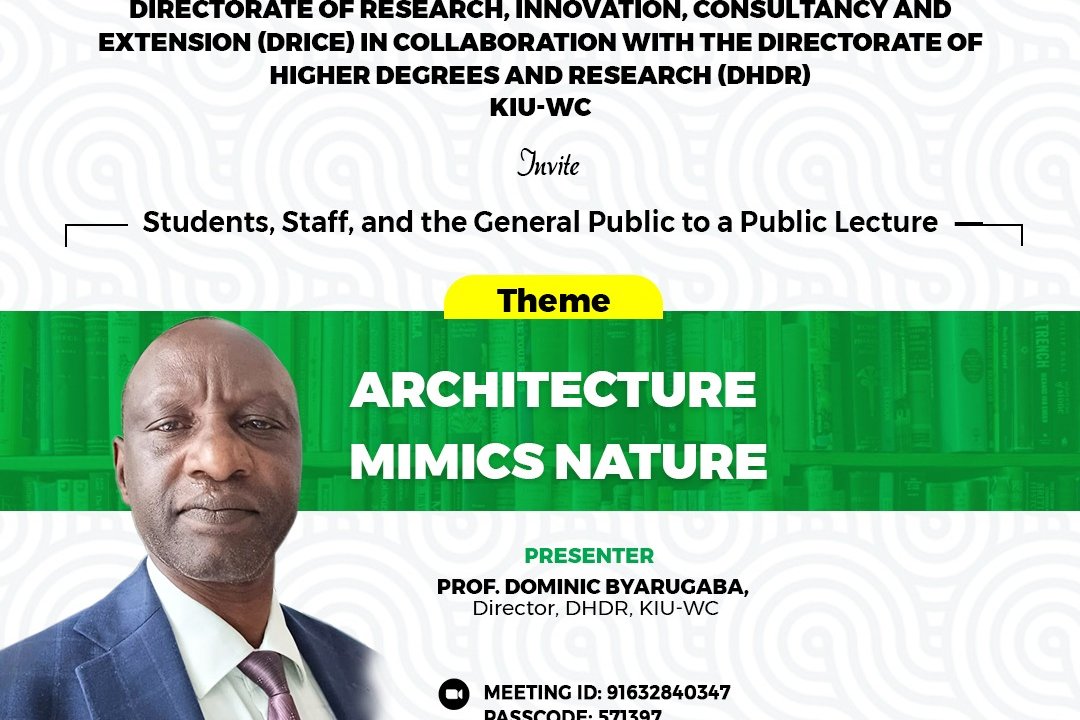
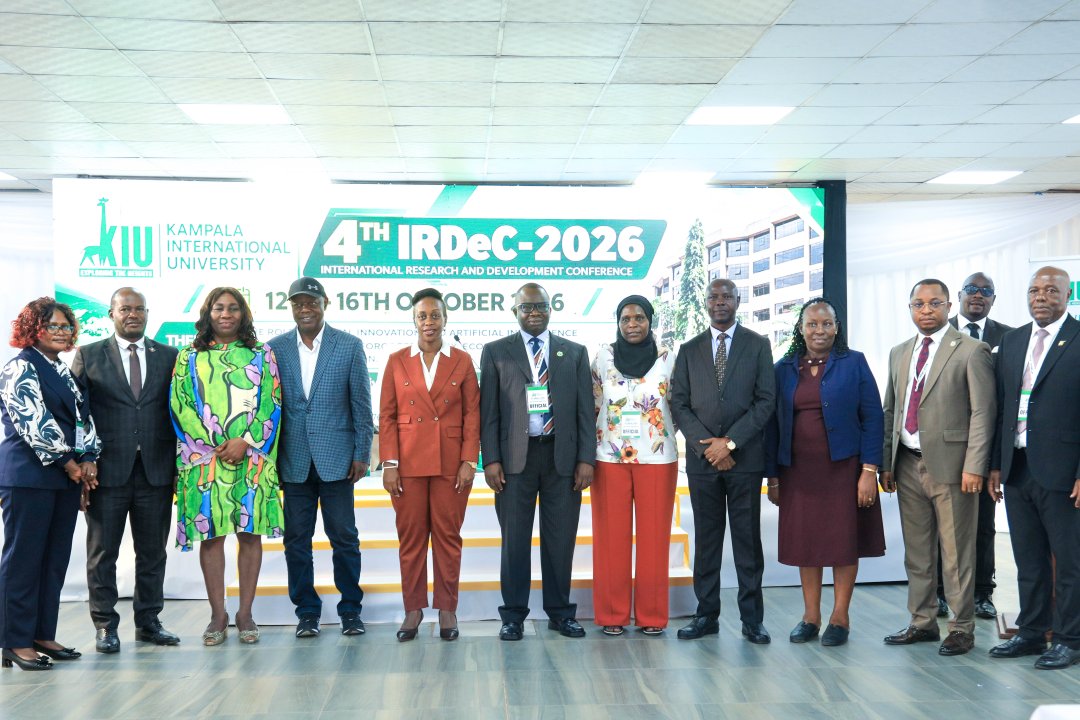
KIU, Western Campus - On Friday, October 23th, 2026, students, staff, researchers and members of the public convened at Kampala International University, Western Campus (KIU-WC) for a public lecture that examined how lessons from nature and indigenous knowledge can inform innovation, research and sustainable development. Held under the theme “Architecture Mimics Nature,” the lecture called for greater efforts to document African knowledge systems and transform them into practical solutions for contemporary challenges. The event was organized by the Directorate of Research, Innovation, Consultancy and Extension (DRICE) in collaboration with the Directorate of Higher Degrees and Research (DHDR).
In his welcoming remarks, Prof. Patrick Aja Maduabuchi, Director of RICE, commended DHDR for organizing the engagement and creating a platform for intellectual exchange. He also expressed appreciation to the presenter for accepting to share his expertise and contribute to the University's ongoing efforts to promote research, innovation and knowledge exchange.
The Assistant Deputy Vice Chancellor for Academics and Research (ADVC-A&R), Dr. Ibrahim Babangida Abubakar, in his opening remarks, emphasized the importance of public lectures in promoting academic discourse, strengthening research culture and advancing knowledge exchange across disciplines.
Delivering the keynote presentation, Prof. Dominic Byarugaba, Director of DHDR, challenged participants to look beyond conventional approaches to innovation and draw inspiration from nature and indigenous knowledge systems. Drawing examples from architecture, engineering, environmental science and traditional African practices, he demonstrated how natural systems have long provided models for sustainable design and development.
A key focus of the lecture was biomimicry, the practice of adapting solutions found in nature to address human challenges. Prof. Byarugaba highlighted termite mounds as remarkable examples of natural engineering whose ventilation and temperature-regulation mechanisms continue to inspire architects and designers worldwide. He also referenced the honeycomb-inspired Sino-Steel Tower in Tianjin, China, and traditional Japanese roof designs as examples of how nature influences modern architecture and engineering.
“Nature solves complex design challenges. If we observe carefully, we realize that many of the solutions we seek already exist in the natural world. Termite mounds, for example, demonstrate effective ventilation and temperature-regulation systems that can inspire the design of more sustainable and energy-efficient buildings,” he said.
The presentation also underscored the value of indigenous knowledge in shaping sustainable solutions. Prof. Byarugaba noted that generations of African communities had developed technologies and practices informed by a deep understanding of their environments, making traditional knowledge an important resource for research and innovation.
“We have a lot of knowledge in Africa that remains undocumented and underutilized. Indigenous knowledge and traditional knowledge should not be viewed as relics of the past. They should be studied, documented and integrated into modern research because they can provide practical solutions to many of the challenges facing our communities today,” he noted.
Calling for stronger investment in research, Prof. Byarugaba encouraged scholars to investigate locally available resources, alternative building materials and environmentally responsive technologies suited to Africa's development needs. He also emphasized the importance of collaboration among universities, researchers, industry and communities in turning research findings into practical innovations.
“Researchers and innovators see what others do not see. Innovation begins with observation. When we pay attention to our surroundings, ask critical questions and investigate local realities, we discover opportunities that can be transformed into meaningful solutions,” he said.
Among his recommendations were the introduction of Critical Thinking and African Problems as a cross-cutting course for undergraduate and postgraduate students, stronger postgraduate research training, enhanced grant-writing capacity, wider research networks and greater integration of indigenous and traditional knowledge into academic programmes.
In his closing remarks on behalf of University Management, Dr. Andrew Onchonga Nyakundi, Director of Quality Assurance and Management, commended Prof. Byarugaba for the insightful presentation and encouraged participants to reflect on the ideas shared during the lecture. He emphasized the need to recognize, preserve and harness Africa's wealth of knowledge as a driver of research, innovation and sustainable development.
The lecture reinforced the importance of connecting indigenous knowledge with scientific inquiry and modern innovation while highlighting the critical role universities can play in transforming knowledge into solutions that benefit society.