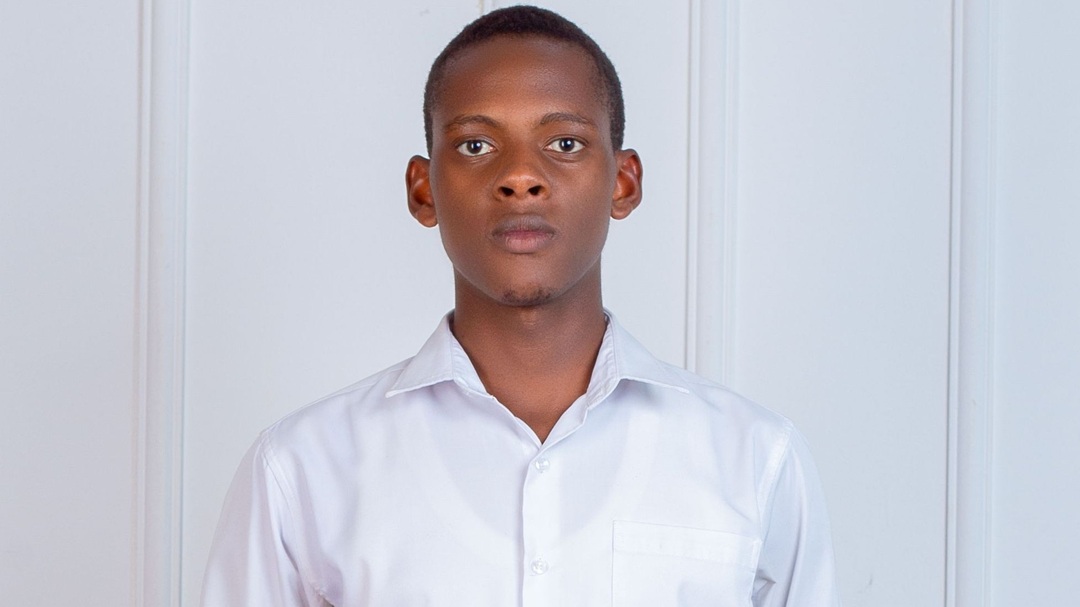
From Liberia to KIU: Franklin Lama Yenglee II’s Journey of Purpose, Growth and Service
- Agnes Kiconco
- /
- June 11, 2026
- 1258

My decision to pursue a Master of Arts in Economics at Kampala International University was born out of both professional responsibility and a deep desire for intellectual growth.
As a lecturer and administrator at Nimba University in Liberia, I confronted daily the realities of a post-conflict economy, limited resources, fragile institutions, inadequate infrastructure and persistent development challenges. Those experiences convinced me that I needed stronger analytical tools to better understand these issues and contribute meaningfully to solutions.
KIU offered the rigorous academic environment I was seeking. More importantly, it provided an opportunity to engage with development experiences from across Africa.
My growing interest in Liberia's macroeconomic challenges, particularly the relationship between inflation and economic growth, made graduate training in economics a natural choice. This degree was never simply about career advancement; it was about equipping myself to serve my students, my institution and my country more effectively.
One of the achievements I am most proud of is the successful completion of my master's thesis examining the relationship between price levels and output growth in Liberia. This research was far more than an academic requirement. It was a meaningful effort to understand factors influencing economic recovery in a nation still navigating the aftermath of conflict. Applying advanced econometric techniques to real Liberian economic data was both challenging and rewarding.
What makes this accomplishment even more significant is that I completed it while continuing to fulfill my responsibilities as a lecturer and administrator back home. Balancing those commitments demanded discipline, careful time management and resilience. It reinforced values that I now encourage in my own students.
My time at KIU transformed me in ways I did not fully anticipate. Academically, I developed stronger analytical and research skills through exposure to advanced econometric methods, macroeconomic theory and empirical research. Professionally, I gained greater confidence in my ability to teach economics with depth and evidence-based insight.
Studying alongside students from across Africa broadened my perspective considerably. Conversations with colleagues from different countries challenged me to examine Liberia's development realities through comparative lenses. I learned that many challenges are shared across the continent, while others are unique to specific contexts. This diversity enriched my understanding of economics and development.
Beyond academics, KIU became a place of leadership and community building. I served as a Course Coordinator, helping bridge communication between students and administrators while supporting academic activities. However, one of the experiences closest to my heart was founding and serving as the inaugural chairman of the Nimba Students Association in East Africa at KIU.
The association emerged from a simple need: Liberian students from Nimba County studying in East Africa lacked a formal structure through which they could connect, support one another and preserve a sense of community. Building that organization taught me valuable lessons about leadership, inclusion and service. It reaffirmed my belief that meaningful leadership is measured not by titles, but by the ability to create opportunities for others to thrive.
Some of my fondest memories at KIU revolve around both intellectual engagement and human connection. I cherish the countless conversations with fellow students about economic policy, African development and the future of our respective countries. Those discussions often extended beyond lecture rooms and became some of the most stimulating learning experiences of my academic journey.
I also developed a deep appreciation for Ugandan culture. Sharing meals and discovering local dishes such as rolex, matooke, groundnut stew and roasted maize helped transform Uganda from a foreign destination into a second home. Through those experiences, I learned that culture and community are powerful teachers in their own right.
My perception of KIU evolved significantly over the course of my studies. When I first arrived from West Africa, I carried understandable uncertainties. I wondered whether I would adapt to a different academic and cultural environment and whether the sacrifices involved in leaving home would be worthwhile.
Those doubts gradually disappeared. I found a university committed to academic excellence and intellectual rigor. The faculty challenged me to think critically, conduct meaningful research and engage deeply with complex economic questions. At the same time, the warmth and hospitality I experienced from students, staff and the wider Ugandan community made the transition remarkably smooth.
Perhaps one of the greatest gifts KIU gave me was its genuinely pan-African character. The university brings together students from diverse backgrounds, creating an environment where ideas, experiences and cultures intersect. Those interactions expanded my worldview and strengthened my appreciation for Africa's shared aspirations and challenges.
As I graduate, I look forward to returning to Nimba University with renewed purpose. I intend to continue teaching, strengthening research and contributing to policy discussions in Liberia. I also hope to publish findings from my master's research and eventually pursue doctoral studies in economics.
I believe there is a growing need for economists with strong quantitative skills in Liberia. With that comes a responsibility to mentor future scholars, strengthen research capacity and promote evidence-based policymaking. Graduation is not the end of that journey; it is the beginning.
To fellow students still pursuing their studies, I offer this encouragement: remain committed to your goals, even during moments of uncertainty and fatigue. Every sacrifice you make today is an investment in opportunities you may not yet see. Invest seriously in your research, build meaningful relationships and embrace the diversity around you.
Allow your education to extend beyond the classroom. Learn from different cultures, challenge your assumptions and remain open to growth. Most importantly, never allow your circumstances to define the limits of your ambitions.
As I celebrate this milestone, I am filled with gratitude. I thank Almighty God for His guidance and strength throughout this journey. I am deeply grateful to my family for their love, patience and sacrifice. I thank my supervisors and lecturers at KIU for their mentorship and intellectual support. I appreciate the leadership of Nimba University for investing in my development and believing in the value of higher education.
I am equally grateful to my students, whose aspirations motivated me during the most challenging moments, and to the members of the Nimba Students Association in East Africa at KIU, who transformed a foreign environment into a community of belonging.
Finally, I thank KIU for providing an academic home where a scholar from Liberia could grow, learn and prepare for greater service. I arrived with questions about my country's future and leave with stronger tools to pursue meaningful answers.
This achievement belongs to many people, and I carry it forward as both a privilege and a responsibility.