Prof. Michael Roberts Inspires KIU Faculty as University Adopts Case-Based Learning for CBET
- Agnes Kiconco
- /
- May 25, 2026
- 416
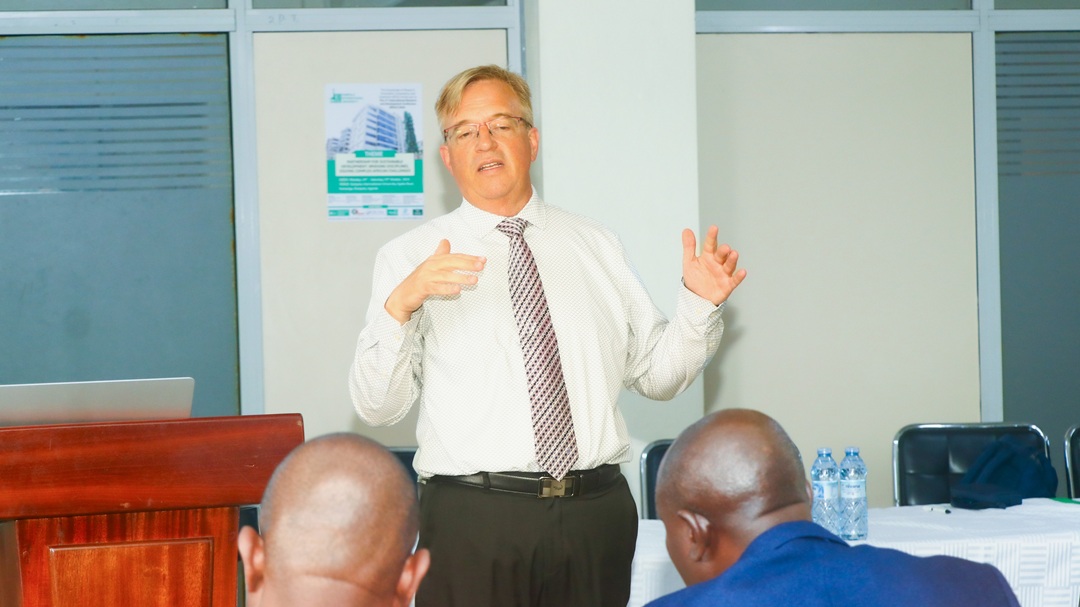
KIU, Main Campus - On Thursday, 21st May 2026, Kampala International University (KIU) proudly welcomed Prof. Michael Roberts from Mount Royale University to lead the Business Case Teaching Workshop at the IBM Library, Main Campus.
Organized in partnership with Ivey Business School, Western University (Canada), the workshop gathered lecturers, Deans, and Heads of Department to explore the transformative power of the case teaching method.
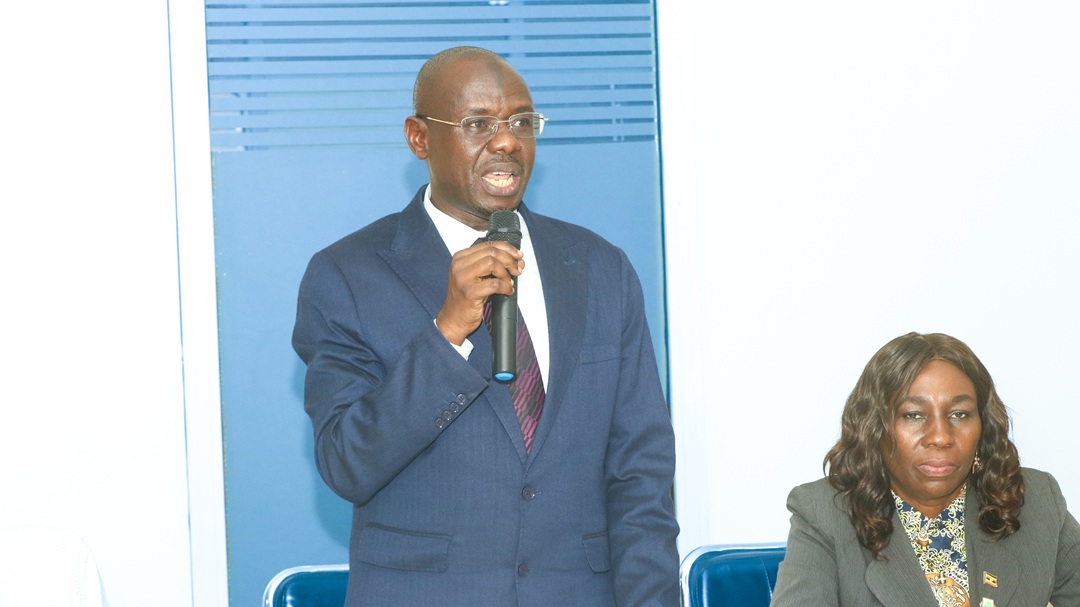
Vice Chancellor Prof. Muhammed Ngoma opened the event by thanking Prof. Roberts for sharing his expertise, noting that the workshop was timely as Uganda prepares to implement Competence Based Education and Training (CBET) in 2027, following the 2025 directive by the First Lady and Minister of Education and Sports.
Prof. Roberts, who has taught with cases for over 25 years, spoke passionately about the method’s ability to bring students closer to real industry challenges.
“We can bring them as close as we can to industry by using cases. And this workshop is only about cases, teaching mostly. Hopefully one day, you’ll find it so interesting that you’ll want to write your own cases,” he said.
He explained that the best way to learn to write cases is to teach with them, since teaching eventually inspires faculty to develop their own. He emphasized that case teaching works everywhere, recalling his experiences in Canada, South Korea, China, Germany, the Czech Republic, and Thailand. In South Korea, he challenged the belief that cases were unsuitable for Korean students, and today most MBA programs there use cases extensively.
He also introduced the 39-Country Initiative, which aims to bring Ivey’s vast case collection—over 10,000 cases, with 400 added annually—to developing countries. “It doesn’t matter what you teach. There is a case that could be useful for you,” he explained, stressing that teaching cases are not just stories but tools to teach lessons. Unlike traditional narratives, they have no ending, leaving students to step into the role of managers and decide what to do. He noted that case teaching is particularly strong in accounting, where CPA exams themselves require case analysis.
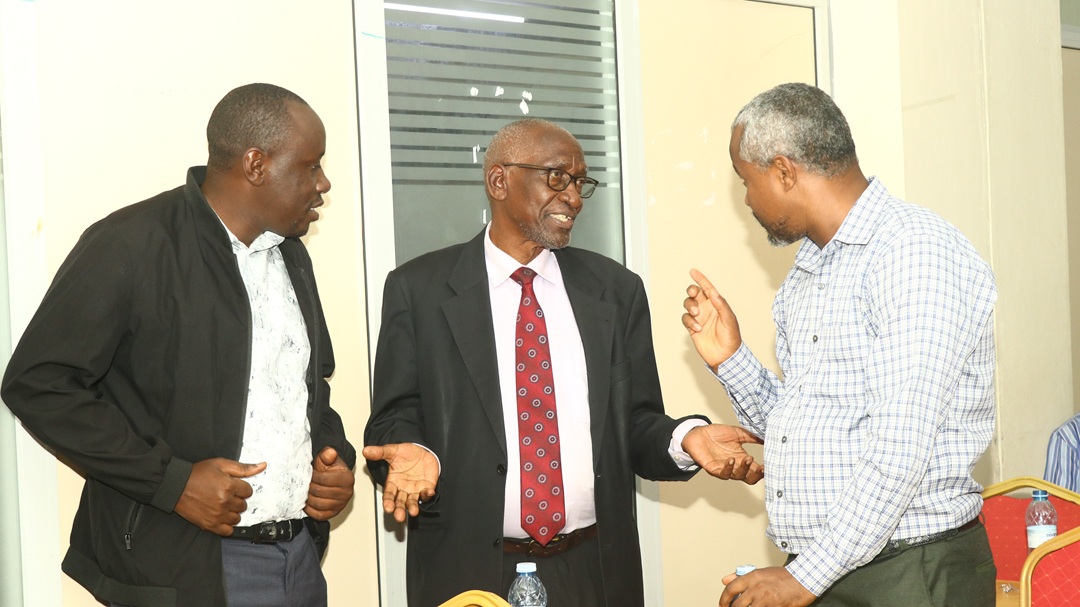
“Nobody remembers an idea. But everybody remembers a story,” he remarked, highlighting the lasting impact of case-based learning.
Prof. Roberts shared practical strategies for using cases in both classroom and online settings. Assigning cases for group presentations, he explained, forces students to engage and defend their reasoning. He described how multiple groups presenting the same case can spark lively debates, with students comparing solutions and challenging each other’s perspectives.
He also noted that cases are increasingly used in exams, offering a “secret solution” to assess students’ analytical skills in real time. He cautioned, however, that poorly written or vague cases can hinder learning, urging faculty to select well-crafted materials.
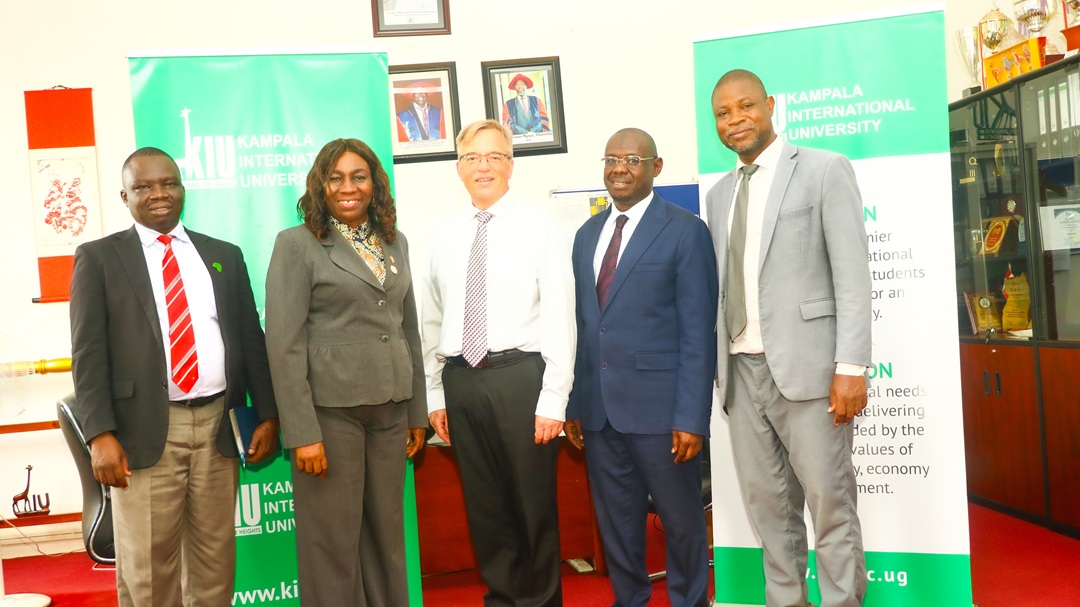
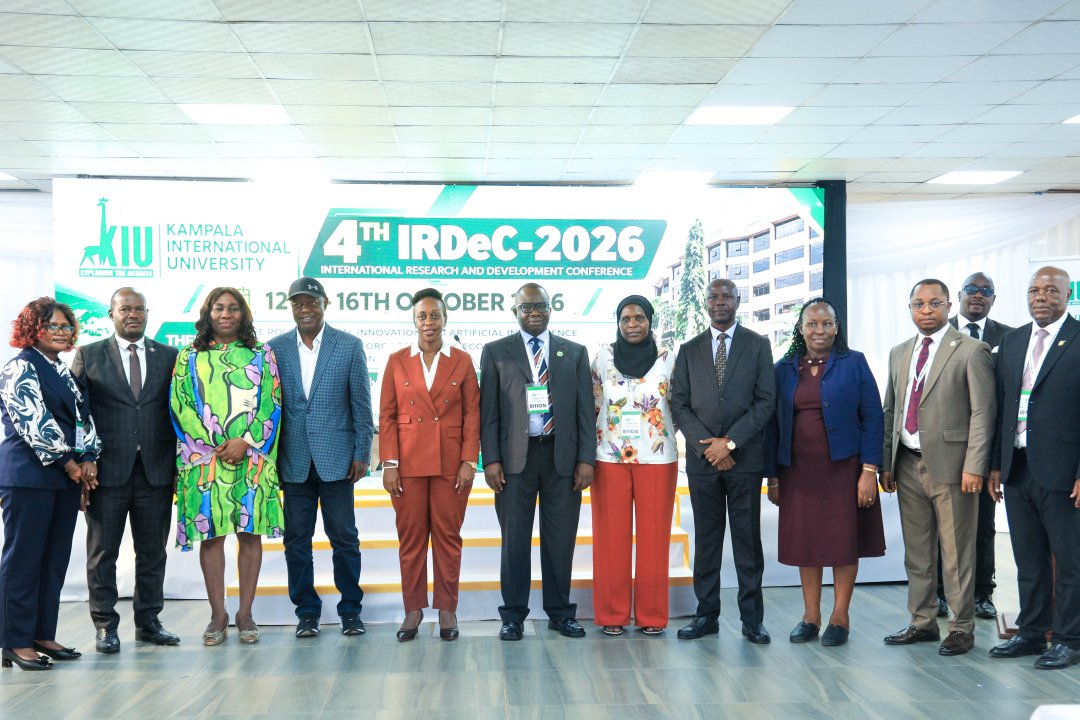
The workshop concluded with words of appreciation. Prof. Regina Ejemot‑Nwadiaro, DVC Research, Innovation, Consultancy & Extension (RICE), speaking on behalf of KIU management, expressed gratitude: “We are indeed very grateful and appreciative for this highly enriching workshop. I believe strongly that your goal of getting us interested has been achieved.”
Dr. Derrick Ssekajugo, Acting Principal of the College of Economics and Management, also thanked Prof. Roberts for his insightful presentation and praised the staff for their active participation.
The Business Case Teaching Workshop at KIU was more than a training session; it was a step toward transforming business education in Uganda.
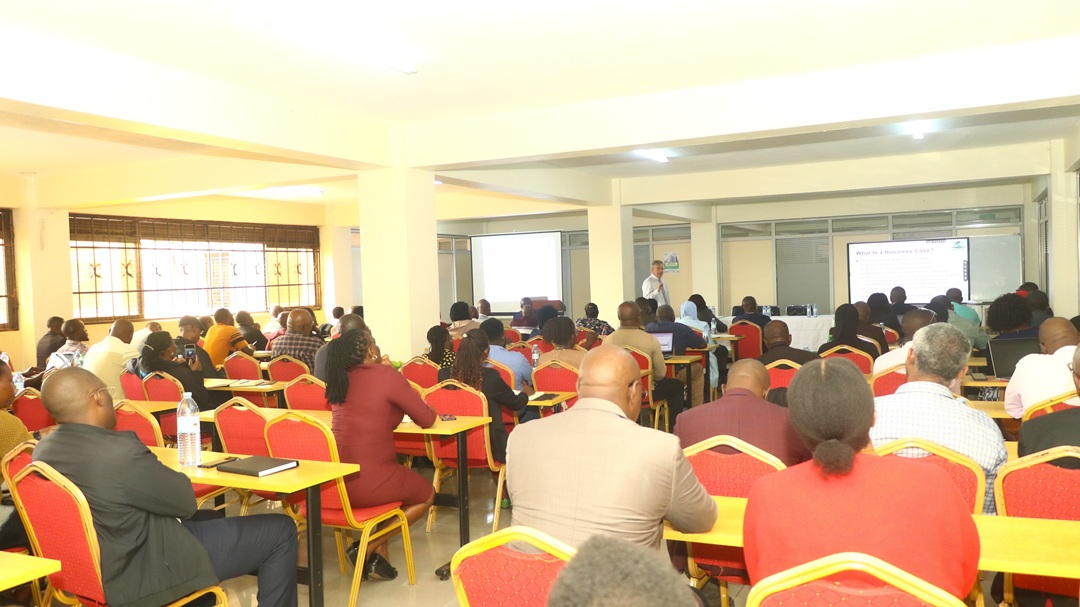
By embracing the case teaching method, KIU is preparing its faculty and students for a future where critical thinking, problem-solving, and industry relevance define higher education.